Old social media posts violated trade dress infringement injunction

social media trade dress
The parties in the case of H.I.S.C., Inc. v. Franmar are competitors, each making garden broom products. In earlier litigation, the defendant filed a counterclaim against plaintiff for trade dress infringement, and successfully obtained an injunction against plaintiff, prohibiting plaintiff from advertising brooms designed in a certain way. Defendant asked the court to find plaintiff in contempt for, among other reasons, certain social media posts that plaintiff posted before the injunction, but that still remained after the injunction was entered. The court agreed that the continuing existence of such posts was improper and found plaintiff in contempt for having violated the injunction.

The court noted that the injunction prohibited “[a]dvertising, soliciting, marketing, selling, offering for sale or otherwise using in the United States the [applicable product trade dress] in connection with any garden broom products.” It observed that “[o]n the Internet and in social media, a post from days, weeks, months, or even years ago can still serve to advertise a product today.” The court cited to Ariix, LLC v. NutriSearch Corp., 985 F.3d 1107, 1116 n.5, in which that court noted that one prominent influencer receives $300,000 to $500,000 for a single Instagram post endorsing a company’s product – a sum surely including both the post itself and an agreement to continue allowing the post to be visible to consumers for a substantial duration of time. Interestingly, the court found that the nature of a social media post may be different from a television or radio advertisement that has a fixed air date and time. Accordingly, the court found that it was inappropriate for social media posts published before the injunction to stay online.

H.I.S.C., Inc. v. Franmar Int’l Importers, Ltd., 2022 WL 104730 (S.D. Cal. January 11, 2022)

See also:

Online retailer’s use of photo of products it did not sell was not an unfair or deceptive act

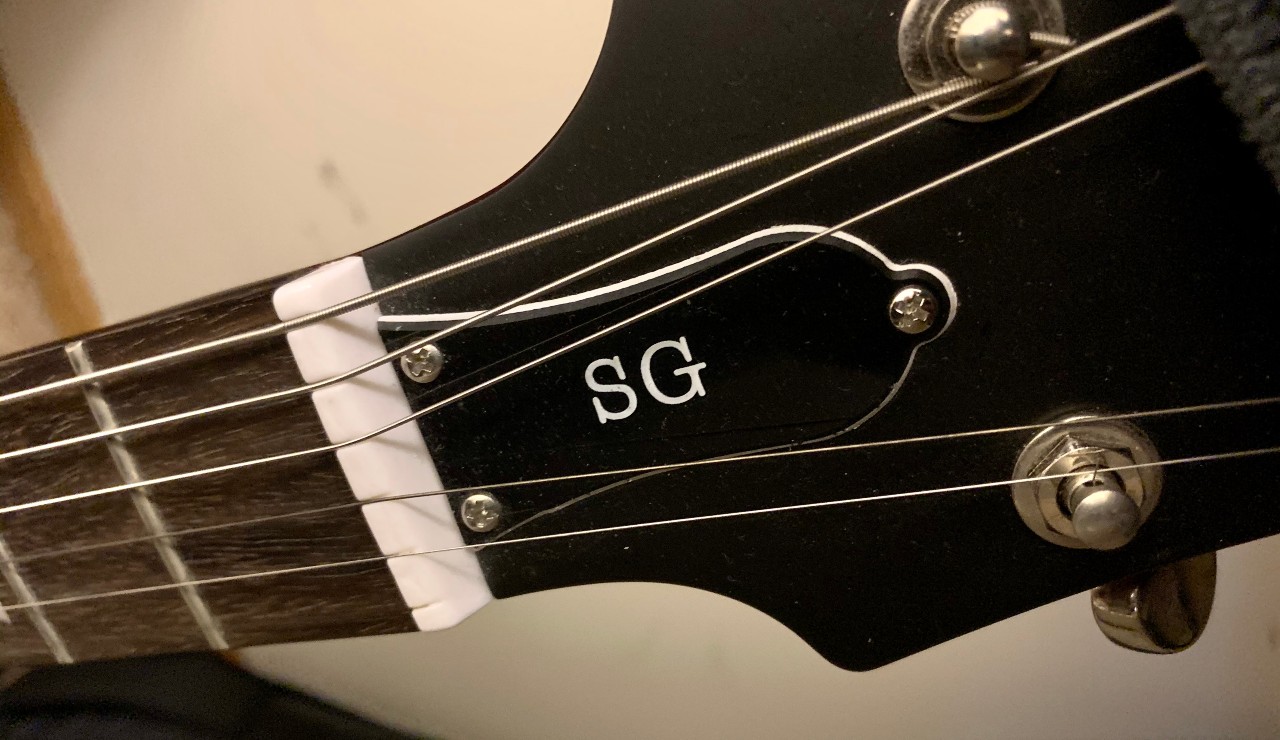
Defendant online guitar retailer used on its website a photo of premium guitar necks – products that the online retailer did not sell. Plaintiff – the purveyor of the premium guitars found in the photo – sued defendant under the New Hampshire consumer protection act which makes unfair or deceptive acts in trade or commerce unlawful. The case went to trial. The court found in favor of defendant.

website photo deceptive practices

The court found three of plaintiff’s key witnesses not credible. Each of them had some sort of personal relationship with the plaintiff that in the court’s view tainted their testimony. One of them testified in a questionable way – he testified remotely via videoconferencing software and was “clearly reading from notes or a script during his direct examination.” And “[r]ather than looking directly into the camera when he answered questions, he consistently fixed his gaze on the left portion of his computer screen each time he began his answer.”

The photo played a minor part in defendant’s website. It was relatively small in comparison to the rest of the material in which it appeared. It took up approximately a third of an online document’s width and was not much bigger than a thumbnail-sized image. The image quality was low – the guitar necks were blurry and it was difficult to tell whether anything was written on the them, such as a logo.

The court found that plaintiff failed to prove that consumers would have understood defendant’s use of the photo to assert an affiliation between defendant and plaintiff. In the court’s mind, even if defendant had proven the assertion of an affiliation, plaintiff failed to prove that defendant acted with the intent required for the applicable statutory violation.

D’Pergo Custom Guitars, Inc. v. Sweetwater Sound, Inc., 2021 WL 3038640 (D.N.H., July 19, 2021)

See also: Alienware goes after “free” computer offer

Intellectual property exception to CDA 230 immunity did not apply in case against Google

Plaintiff sued Google for false advertising and violations of New Jersey’s Consumer Fraud Act over Google’s provision of Adwords services for other defendants’ website, which plaintiff claimed sold counterfeit versions of plaintiff’s products. Google moved to dismiss these two claims and the court granted the motion. 

On the false advertising issue, the court held that plaintiff had failed to allege the critical element that Google was the party that made the alleged misrepresentations concerning the counterfeit products. 

As for the Consumer Fraud Act claim, the court held that Google enjoyed immunity from such a claim in accordance with the Communications Decency Act at 47 U.S.C. 230(c). 

Specifically, the court found: (1) Google’s services made Google the provider of an interactive computer service, (2) the claim sought to hold Google liable for the publishing of the offending ads, and (3) the offending ads were published by a party other than Google, namely, the purveyor of the allegedly counterfeit goods. CDA immunity applied because all three of these elements were met. 

The court rejected plaintiff’s argument that the New Jersey Consumer Fraud Act was an intellectual property statute and that therefore under Section 230(e)(2), CDA immunity did not apply. With immunity present, the court dismissed the consumer fraud claim. 

InvenTel Products, LLC v. Li, No. 19-9190, 2019 WL 5078807 (D.N.J. October 10, 2019)

About the Author: Evan Brown is a Chicago technology and intellectual property attorney. Call Evan at (630) 362-7237, send email to [email protected], or follow him on Twitter @internetcases. Read Evan’s other blog, UDRP Tracker, for information about domain name disputes.

Web scraping case fails under Dastar

Plaintiff sued defendant claiming that defendant wrongfully scraped sales listings from plaintiff’s website and copied those listings on defendant’s own website. It brought the following claims:

  • Violation of the Copyright Act’s prohibitions against distributing false copyright management information (“CMI”) (17 U.S.C. §1202(a)), and removing or altering CMI (Id., §1202(b)); and
  • Violation of the Lanham Act for reverse passing off and false endorsement.

Defendant moved to dismiss for failure to state a claim upon which relief could be granted. The court granted the motion.

CMI claim

The court dismissed the claim asserting distribution of false CMI because plaintiff alleged that the false CMI was a blanket copyright notice found on defendant’s website’s terms of use, and not on the pages where the copied content was displayed.

It also dismissed plaintiff’s claim for removal of CMI because it found that the allegations concerning the CMI allegedly removed – a copyright notice found at the bottom of the pages of plaintiff’s website – covered the pages of the website itself, not the particular listings that were allegedly copied without the CMI. It held that:

To violate the DMCA, the false CMI must be “conveyed in connection” with the work. General copyright notices are not “conveyed” with the work, and thus do not violate the DMCA. [See GC2 Inc. v. Int’l Game Tech. PLC, 255 F. Supp. 3d 812, 821 (N.D. Ill. 2017)] (“Courts, however, have generally required more than a boilerplate terms of use notice near a copyrighted work in order to find a party liable for distributing false CMI”); Pers. Keepsakes, Inc. v. Personalizationmall.com, Inc., 2012 WL 414803, at *7 (N.D. Ill. Feb. 8, 2012) (“[A]s a matter of law, if a general copyright notice appears on an entirely different webpage than the work at issue, then that CMI is not ‘conveyed’ with the work and no claim will lie under the DMCA.”)

Lanham Act claim

On the Lanham Act claim, the court found that plaintiff failed to allege that it had a protectible mark that was being used in a manner that was likely to cause confusion among consumers.

The court also applied the 2003 Supreme Court case of Dastar Corp. v. Twentieth Century Fox Film Corp., 539 U.S. 23 (2003) to find that plaintiff’s Lanham Act claim failed. In Dastar, the Supreme Court concluded that “false designation of origin” as it is used in the Lanham Act attaches to the producer of tangible goods that are offered for sale, and not to the author of any idea, concept, or communication embodied in those goods. In this case, the defendant created the final product (website listings), albeit using the plaintiff’s content (just like in Dastar). Because plaintiff was not the source of the product (the duplicated listings), it did not have a claim under the Lanham Act.

Alan Ross Machinery Corp. v. Machinio Corporation, 2018 WL 6018603 (N.D.Ill. November 16, 2018)

Court reinstates SCO’s misappropriation claim against IBM in long-running lawsuit

For almost a decade and a half, SCO and IBM have been fighting over their collaboration gone wrong concerning the development of a new version of UNIX for Intel processors. The case has garnered much attention, including from the open source community. You can read the backstory here on the Wikipedia page for the dispute. The case has been on appeal to the Tenth Circuit, which released its opinion on October 30. The decision was a mixed ruling – the court affirmed summary judgment in favor of IBM on most of the issues, but ruled in favor of SCO on one important claim – misappropriation.

SCO sued IBM for the tort of misappropriation (a form of unfair competition) arising from IBM’s alleged use in its own product of source code that SCO had contributed to the joint efforts to develop the new UNIX version. The district court granted IBM’s motion for summary judgment on the misappropriation claim, holding that such a claim was barred under New York law’s “independent tort doctrine”. SCO sought review with the Tenth Circuit Court of Appeals. The court reversed and remanded the case on the misappropriation claim.

This doctrine provides that a simple breach of contract is not to be considered a tort unless a legal duty independent of the contract itself has been violated. This separate duty must spring from circumstances extraneous to, and not constituting elements of, the contract, although it may be connected with and dependent upon the contract.

In this case, the court held that while IBM and SCO may not have had a formal partnership or joint venture as a matter of law, they surely enjoyed a business relationship in which each reposed a degree of trust and confidence in the other. In such a situation, there exists a duty not to take a business collaborator’s property in bad faith and without its consent in order to compete against that owner’s use of the same property.

SCO v. IBM, — F.3d —, 2017 WL 4872572 (10th Cir., October 30, 2017)

Evan_BrownAbout the Author: Evan Brown is a Chicago technology and intellectual property attorney. Call Evan at (630) 362-7237, send email to ebrown [at] internetcases.com, or follow him on Twitter @internetcases. Read Evan’s other blog, UDRP Tracker, for information about domain name disputes.

Reports to advertisers about website content were protected speech

Plaintiff sued defendant in California state court for trade libel and other business torts over confidential reports that defendant provided to its customers (who advertised on plaintiff’s website) characterizing plaintiff’s websites as associated with copyright infringement and adult content.

Defendant moved to dismiss under California’s anti-SLAPP statute which, among other things, protects speech that is a matter of public concern. The trial court granted the anti-SLAPP motion. Plaintiff sought review. On appeal, the court affirmed the anti-SLAPP dismissal.

The court held that the communications concerning plaintiff’s websites (as being associated with intellectual property infringement or adult content) were matters of public concern, even though the communications were not public.

FilmOn.com v. DoubleVerify, Inc., 2017 WL 2807911 (Cal. Ct. App., June 29, 2017)

Evan_BrownAbout the Author: Evan Brown is a Chicago technology and intellectual property attorney. Call Evan at (630) 362-7237, send email to ebrown [at] internetcases.com, or follow him on Twitter @internetcases. Read Evan’s other blog, UDRP Tracker, for information about domain name disputes.

Co-founder liable for sending company’s social media followers to new competing company’s Facebook page

2261434057_87ddea278a_zThe owners of an LLC successfully published a magazine for several years, but the business declined and the company eventually filed bankruptcy. While the bankruptcy proceedings were still underway, one of the owners started up a new magazine publishing the same subject matter. He essentially took over the old company’s website to promote the new magazine. And he posted to the LLC’s Facebook page on three separate occasions, “reminding” those who liked the page to instead like his new company’s Facebook page.

The bankruptcy trustee began an adversary proceeding against the owner asserting, among other things, breach of fiduciary duty, unfair trade practices, and copyright infringement. The bankruptcy court held a trial on these claims and found the owner liable.

On the breach of fiduciary duty claim, the court equated the “reminding” of Facebook users to visit and like the new company’s Facebook page was equivalent to using the company’s confidential information. Similarly, as for the unfair trade practices claim (under the Louisiana Unfair Trade Practices Act), the court found that social media is “an important marketing tool,” and held that “taking away followers of [the old company] and diverting them to [the Facebook page of the new company]” was an unfair trade practice.

On the copyright infringement claim, the court found that the images and articles on the website belonged to the old company under the work made for hire doctrine and that the owner had not obtained consent nor paid compensation for their use in connection with the new enterprise.

In re Thundervision, L.L.C., 2014 WL 468224 (Bkrtcy.E.D.La. February 5, 2014)

Photo credit: Flickr user 1lenore under this Creative Commons license.

No copyright protection for two word phrase

quipIn a final pretrial order, plaintiff stated that “to this day [defendant] persists in using [plaintiff’s] copyrighted ‘usurpassed performance’ language on its packages.” Defendant filed a motion in limine (a motion to exclude evidence) to preclude plaintiff from introducing evidence or putting on testimony that would infer or suggest the phrase “unsurpassed performance” has been registered as a copyright.

The court granted the motion.

Under the Copyright Act, “[w]ords and short phrases such as names, titles, and slogans” are not subject to copyright. 37 C.F.R. § 202.1(a). The court looked to a number of cases in which short phrases had been denied copyright protection. For example, other courts had held that “Where Words Come Alive,” “Earth Protector,” “Chipper,” and “Retail Plus” were not copyrightable material.

One wonders whether plaintiff was really trying to assert some form of unfair competition or trademark infringement. The notion is worth entertaining for but a brief moment, till one realizes that laudatory phrases such as “unsurpassed performance” find no protection under trademark law either.

Predator International, Inc. v. Gamo Outdoor USA, Inc., 2014 WL 321069 (D.Colo. January 29, 2014)

When do you need a nondisclosure agreement?

I wrote a blog post for Tech Cocktail called 5 Reasons You May Need an NDA. I hope you’ll click on over and give it a read.

Here are the 5 reasons I came up with. Can you think of others?:

  1. Your discussions turn from “what” to “how.”
  2. You are dealing with someone other than an investor.
  3. You have made substantial investment in your innovation.
  4. You will be sharing documents or data.
  5. You want to save on legal fees.

Leave your comments below. I know there are many other reasons — pro and con — concerning NDAs.

Use of trademark in gripe site subdomain was not likely to cause confusion

Ascentive, LLC v. Opinion Corp., 2001 WL 6181452 (E.D.N.Y. December 13, 2011)

Plaintiffs sued gripe site pissedconsumer.com for trademark infringement and other forms of unfair competition. The court denied plaintiffs’ motion for preliminary injunction. It found, among other things, that defendants’ use of plaintiffs’ trademarks as subdomains (e.g., ascentive.pissedconsumer.com) was not likely to cause confusion.

The court looked to other cases where gripe site operators chose negative words to use in conjunction with the company being criticized. Over the years, gripe site operators have commonly chosen to add the word “sucks” to the target brand. For example, in Taubman Co. v. Webfeats, 319 F.3d 770 (6th Cir. 2003), the court held there was no trademark violation by the site taubmansucks.com.

Other “suck” parts of the URL have risen above the trademark infringement fray. A case from over a decade ago found that the web address compupix.com/ballysucks would not create a likelihood of confusion because no reasonable visitor to the site would assume it to come from the same source or think it to be affiliated with, connected with, or sponsored by Bally’s. Bally Total Fitness v. Faber, 29 F.Supp.2d 1161 (C.D. Cal. 1998).

And it’s not just that these brands purport to suck. In Taylor Building Corp. v. Benfield, 507 F.Supp.2d 832 (S.D. Ohio 2007), the court found that taylorhomesripoff.com, used in connection with a forum for criticizing plaintiff, did not create any likelihood of confusion.

In this case, the notion of being “pissed” joins a lexicon of permissible gripe site nomenclature (depending on the circumstances, of course). So says the court: “Like the word ‘sucks,’ the word ‘pissed’ has entered the vernacular as a word instinct with criticism and negativity. Thus, no reasonable visitor to the [offending pages] would assume the sites to be affiliated with [plaintiffs], and PissedConsumer’s use of plaintiffs’ marks in the various domain names at issue is not likely to cause confusion as to source.”

Aside: Good lawyering by my friend Ron Coleman for the defendants in this case.

Scroll to top